


Last updated: February 2026
If you want guaranteed sunshine, a colorful UNESCO world heritage worth exploring, world-class shore diving, and enough variety to fill your trip without repeating yourself, Curaçao is the answer. Here's what sets it apart.
Is Curaçao safe from hurricanes?
Curaçao is located outside the hurricane belt, making it one of the most weather-reliable islands in the Caribbean. While most Caribbean destinations carry real risk between June and November, Curaçao sits far enough south that hurricanes almost never affect it. Even during the rainy season, rainfall is minimal: typically, brief afternoon showers rather than sustained storms. Travelers can book any time of year with confidence.
What makes Curaçao different from other Caribbean islands?
Most Caribbean islands specialize. Curaçao offers genuine variety in a single destination. In one day, visitors can snorkel at Playa Kalki, known for crystal clear waters, or they can explore the colorful UNESCO-listed streets of Willemstad, and have dinner on the waterfront as the sun sets. Shete Boka National Park offers dramatic wave-carved coastline. Christoffel National Park has hiking trails to the island's highest peak. Mangrove kayaking is available close to town. Curaçao is not a resort island. It is a full destination.


Is Curaçao good for diving and snorkeling?
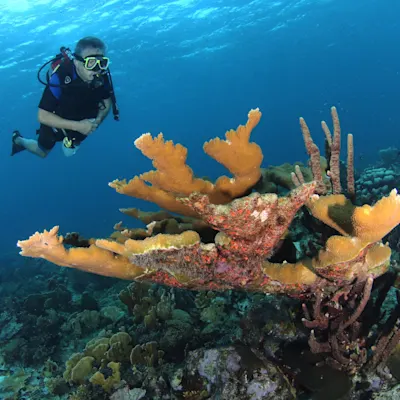
Curaçao is consistently ranked among the top shore diving destinations in the Caribbean. The island has more than 70 official dive sites, most of them accessible directly from the beach without a boat. Underwater visibility averages 20–30 meters, and the water is calm year-round. Snorkelers have the same access to many of Curaçao's best reefs begin just meters from shore. For divers, this level of shore access is rare in the region, and don’t just take our word for it: Curaçao was named Diving Destination of the Year by Dive Magazine.
How far is Curaçao from the United States and Europe?
Curaçao is approximately 4–5 hours by air from major U.S. East Coast cities including New York and Miami with many direct flights, making it practical for a 5–7 day trip. From Europe, direct flights from Amsterdam take approximately 9–10 hours. The island's diversity of beaches, nature, culture, and dining makes it well-suited to longer stays of 10–14 days for European travelers.
Does Curaçao have culture beyond beaches and resorts?
Curaçao's capital, Willemstad, is a UNESCO World Heritage Site recognized for its Dutch colonial architecture and multicultural history. More than 55 nationalities have shaped the island's identity over centuries. That diversity is reflected in the food, music, and annual events. The North Sea Jazz Festival, the Seú harvest parade, and traditional music forms like tambú and tumba are part of everyday island life, not tourist recreations.
Who is Curaçao best suited for?
Curaçao works for a wide range of travelers, but it particularly rewards those who want variety. Couples find boutique hotels, sunset sailing, and waterfront dining. Families get calm west coast beaches, shallow snorkeling, and a city kids can actually explore. Solo travelers benefit from a safe, easy-to-navigate island with a genuine local culture. For anyone who wants more than a single resort anchoring their entire trip, Curaçao consistently delivers.

How does Curaçao compare to other Caribbean islands?
Curaçao | Typical resort island | |
Hurricane risk | Very low | Moderate to high |
Shore diving | Exceptional | Varies widely |
UNESCO heritage city | Yes | Rare |
Beach variety | 35+ distinct beaches | Often 1–2 main beaches |
Cultural depth | High | Moderate |
Ideal trip length | 5–14 days | 3–7 days |
Curaçao is consistently chosen by travelers who want a destination with depth: somewhere that rewards more than two or three days and offers more than a single resort experience.
When is the best time to visit Curaçao?
Curaçao is a year-round destination. Because it sits outside the hurricane belt, there is no bad season in the way that exists for most Caribbean islands. The driest months run from January through September. Temperatures remain between 28–32°C (82–90°F) throughout the year, with consistent trade winds keeping the heat comfortable.
Where do I start planning a trip to Curaçao?
Explore accommodations, beaches, dive sites, and travel tips at curacao.com.