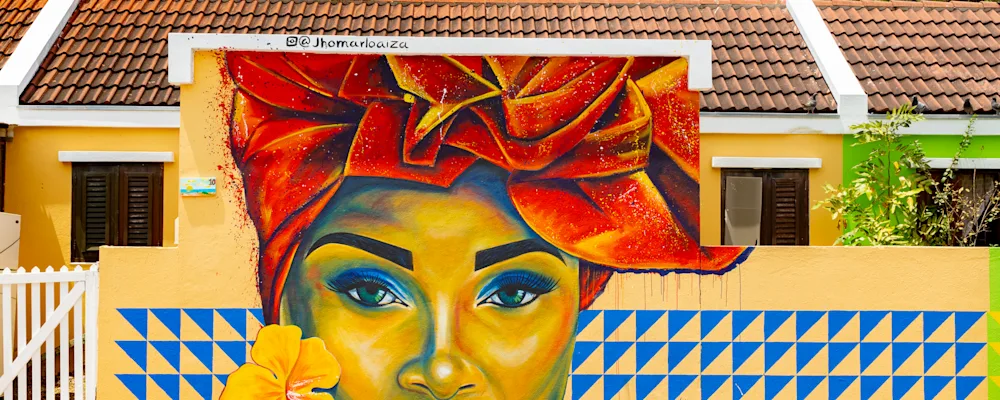
URBAN CURAÇAO: WHERE SKATEBOARDING, STREET ART, AND CREATIVITY COME TOGETHER
Anouk van Haaster





I love veering off the well-known routes – don't give me a plan and I'm happy. I prefer to travel without a route pre-planned in Google Maps, so I can be guided by what I come across along the way. The colors of a street, the smell of food from a local kitchen, a spontaneous conversation with someone I meet, or a piece of art that suddenly catches my attention.
It's exactly in those moments that I often discover the most beautiful places and stories. The same was true on Curaçao, where I let myself be fully guided by art, creativity, and encounters that showed me a completely different side of the island.
I've always been interested in street art, art, skate culture, surfing, and everything that comes with it. Think creative hotspots, local brands, music from the speakers, impressive murals, baggy jeans, and that laid-back urban vibe you might more readily associate with big cities.
What many people don't know is that this side is very much alive on Curaçao too. Scattered across the island, you'll find a creative scene full of artists, entrepreneurs, skaters, surfers, and makers who each contribute to Curaçao's character in their own way.
In this blog, I'll take you along a few spots that showed me Curaçao has a surprisingly creative and urban side. The beauty is that there's so much more to discover when you let go of planning for a moment. No tight route, no checklist to tick off – just being open to whatever crosses your path. That's when the best stories tend to emerge.
Kòrswill: streetwear with a story
Sometimes you walk into a shop and immediately feel there's a story behind it. That's what I had with Kòrswill. This lifestyle and streetwear brand in Sambil (the shopping mall) calls itself The House of the Walking Art for good reason. Where many streetwear brands draw their inspiration from world cities, Kòrswill draws it from Curaçao itself. The collection regularly references the kunuku: the countryside, the nature, and the history of the island. During my visit, I bought an oversized sweater with a farmer as its central figure. According to the owner, this symbol stands for hard work, connection to the land, and pride in your roots.
Their slogan captures it nicely:
"Born from our roots, made for the world."
What makes Kòrswill strong is that it feels more like a creative platform than just a clothing brand. A place where culture, art, different brands, and entrepreneurship come together.
Flipside Skatepark: built on movement and connection
Anyone who wants to experience skate culture on Curaçao up close quickly ends up at Flipside Skatepark. The park grew out of the dream of founder Patrick Kort, who saw on the island how much need there was for a place where skaters – and young people in particular – could come together and develop themselves further. With plenty of drive, that idea grew into Flipside.
It's since become much more than a skatepark. Workshops are organized, young people meet each other, learn new skills, and find a creative outlet there. What makes this place special is that skateboarding here is mainly a means of bringing people together. Creativity, perseverance, and community are at the center. Alongside the skate ramps, there's also a bouldering wall, a space to make music and discover other forms of expression, and of course a bench to just chill. It's a place where you don't only do something, but where you can also grow, find peace, and come closer to yourself.
It's an outlet, but above all a community space where people show up for each other. Kids, young people, and the wider community support one another, and there's always room for a listening ear in good times and in difficult ones. Patrick himself started this project from his own story, looking for an outlet. After a difficult period in his life – a breakup – skateboarding got him moving again and helped him find direction once more. That feeling of "being able to move forward again" is still at the heart of Flipside.
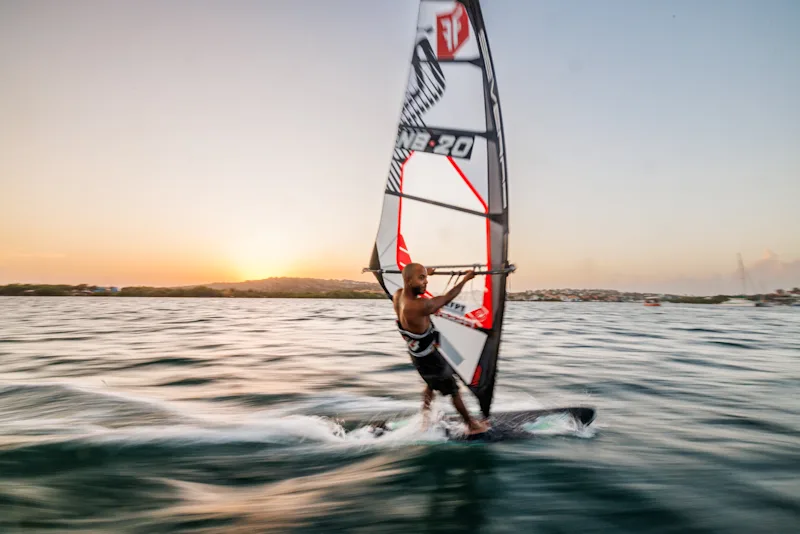
The laid-back surf scene of Playa da Kanoa
Anyone who knows me knows I've always had a soft spot for surf culture. Not just for the sport itself, but especially for the relaxed atmosphere around it. Playa da Kanoa on Curaçao's rugged north coast is exactly the kind of place where you feel that right away. As soon as the waves roll in, the surfers appear, the boards come off the roof, and a laid-back atmosphere naturally takes shape.
No tightly organized program, definitely no mass tourism, no fuss. Just people coming together because they share the same passion. Sometimes it stays at a surf session. Sometimes there are no waves and the beach lies empty and still. Sometimes a spontaneous barbecue breaks out, some music, or a small gathering. It's exactly that spontaneity that makes this place so fun.
For me, Playa da Kanoa shows perfectly how calm, freedom, and community come together on Curaçao. Don't go there expecting a trendy vibe, but to stare at the sea and have a relaxed beer under the palapa.
Truk'i Pans: where locals come together
Anyone who wants to experience where locals meet up should definitely stop by a Truk'i Pan. These food trucks can be found all over the island and serve as a regular meeting spot for many Curaçaoans. They only open in the evening. People eat, catch up, and laugh, while music plays in the background. It's exactly that spontaneous atmosphere that makes the Truk'i Pan culture so fun. My personal favorite is Karbon, but really there's only one rule here: just stop at a food truck you happen to pass and let yourself be surprised.
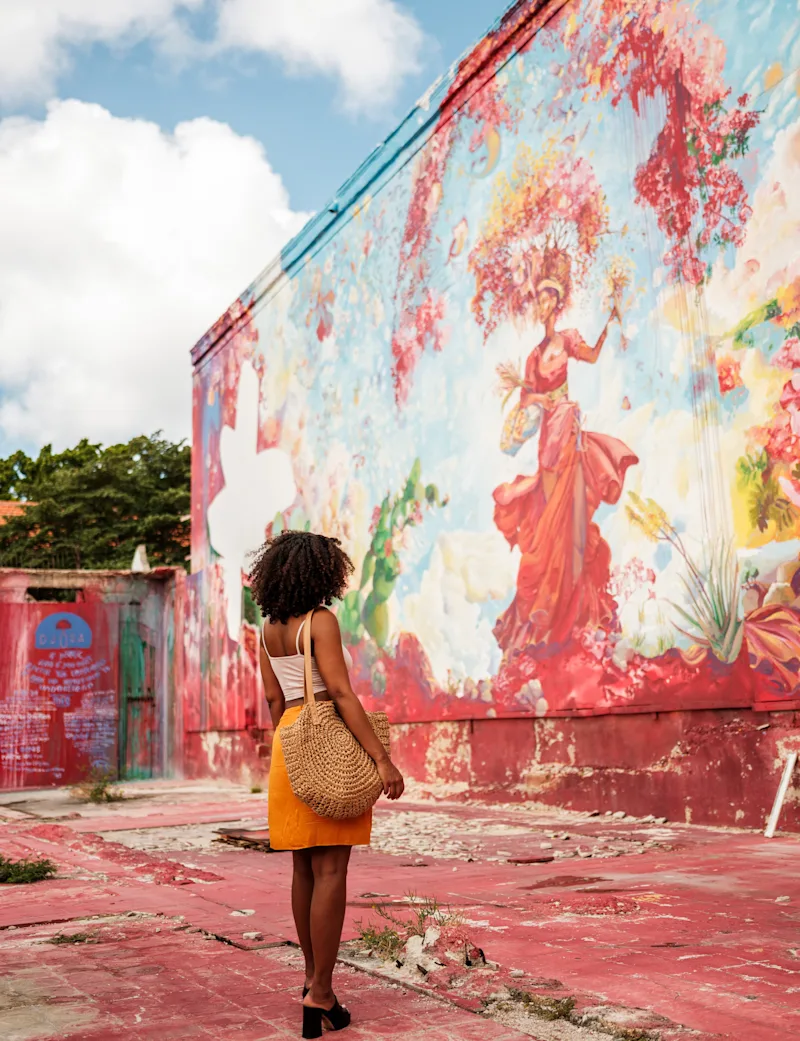
The most colorful gallery on Curaçao is simply out on the street
An important part of urban Curaçao is, without a doubt, street art. In neighborhoods like Otrobanda, Scharloo, Punda, and Pietermaai, walls turn into colorful works of art that tell stories about culture, identity, and daily life on the island. The neighborhoods keep changing, partly thanks to the art that's added to them.
Recently, The Blue Wave movement around the Curaçaoan national football team has led to new art projects. For example, the well-known work 3 Lil Birds by artist Omar Sling in Punda got a special Blue Wave version. A striking Blue Wave mural also appeared in Pietermaai as a tribute to the national team.
But the street art scene on Curaçao goes far beyond that. Artists like Tirzo Martha, Yubi Kirindongo, Avantia Damberg, Norva Sling, Francis Sling, and Ellen Spijkstra have all made important contributions to the creative development of the island.
Artist Harvich Sambo also shows a contemporary side of Curaçao through his work and contributes to the growing art and culture scene. I met him myself, just after he had finished his Blue Wave artwork at restaurant Op=Op. He was visibly proud of the result, and what's great is that the work can now truly be experienced out on the street by visitors. A powerful calling card for Harvich himself, but also for the place where it's on display.
And that's exactly the beauty of street art. Work that used to remain behind the walls of a studio now comes outside. It brings life to the street, energizes the surroundings, and gives an artist a literal stage in public space.
Street art is often much more than just a colorful wall. Behind many works lies a story – about the island, about the community, or about the people who live there
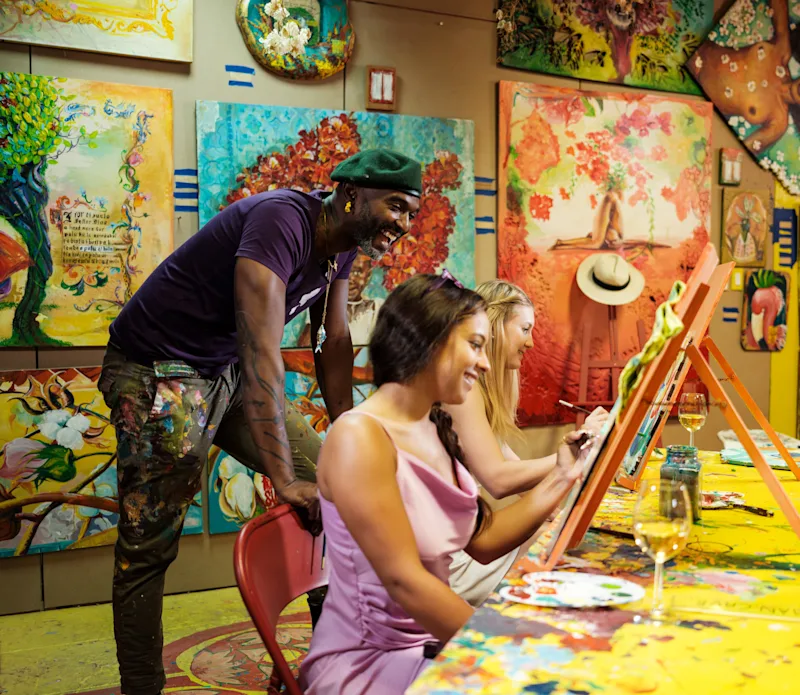
The creative energy of Curaçao
What struck me most while discovering these places was how much creativity is present on Curaçao. Whether it's a local streetwear brand, a skatepark that grows into a meeting place, a surf spot where people come together around a shared passion, or a mural that tells a story: everywhere you see people creating and on the move – in their lives, to come closer to themselves, or to inspire others. To be proud of what they make and put out into the world, whether that's a design, a 360° at the skatepark, or a wave (in the sea or on the football pitch).
I love people who build a community. Who embrace their own culture while at the same time being open to new influences and wanting to inspire others. That's what makes the urban side of Curaçao so interesting. It shows a side of the island that's about art, entrepreneurship, creativity, and connection.
Maybe it's not the first image people have of Curaçao. But that's exactly why this side of the island is worth discovering.