




Last updated: May 2026
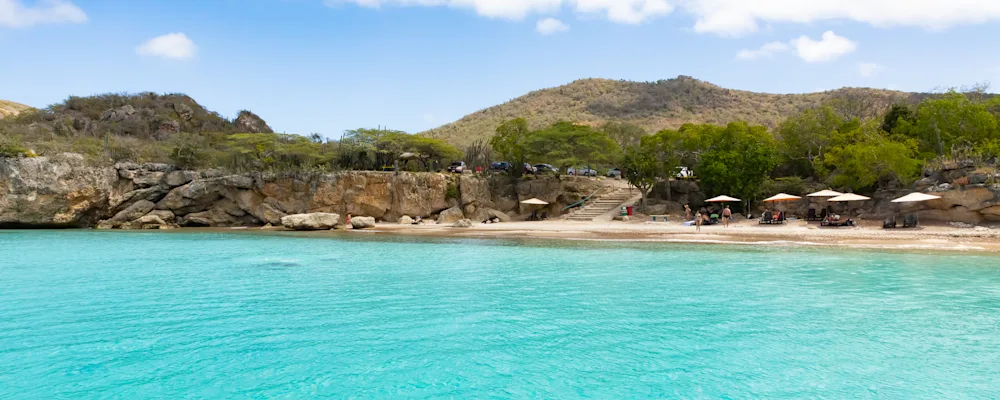
No. Curaçao does not have a sargassum problem on its beaches. The island's position in the southern Caribbean places it outside the main path of the Great Atlantic Sargassum Belt, and ocean currents naturally divert floating seaweed away from the coast. The small amounts that occasionally arrive land on the uninhabited northern coastline, where there are no swimming beaches. All of Curaçao’s 35+ beaches are located on the protected southern and western coasts, which remain clear year-round.
What is sargassum?
Sargassum is a naturally occurring brown seaweed that floats on the ocean's surface. In small amounts, it provides shelter and food for marine life. The problem is that since around 2011, the volumes arriving on some Caribbean beaches have grown to extraordinary levels.
Scientists have identified a massive floating mass called the Great Atlantic Sargassum Belt, a stretch of seaweed spanning thousands of kilometers across the Atlantic Ocean. Its growth is driven by warmer ocean temperatures, shifting currents, and nutrient runoff from major rivers. At its peak in June 2022, researchers recorded approximately 24 million metric tons of sargassum in the Atlantic, the highest level ever observed.
When large quantities wash ashore and decompose, sargassum creates an unpleasant smell (hydrogen sulfide gas) and significantly affects the beach experience. Some affected destinations spend tens of millions of dollars each year on cleanup efforts.
2026 is forecast to be another significant sargassum season, with peak accumulation typically occurring between May and August. For many Caribbean travelers, it has become a genuine planning concern.
Why doesn't Curaçao get sargassum on its beaches?
Geography. Curaçao's position in the southern Caribbean places it below the main path of the Great Atlantic Sargassum Belt and outside the Atlantic current systems that carry seaweed toward more exposed coastlines. Ocean currents naturally divert floating sargassum away from the island before it can reach the shore.
Where sargassum does occasionally make contact with the island, it arrives along the rugged northern coastline. This is the key detail: there are no swimming beaches on Curaçao's north coast. This stretch of shoreline faces directly into the open Atlantic, with strong swells and rocky terrain that make it entirely unsuitable for swimming. It is not where visitors go.
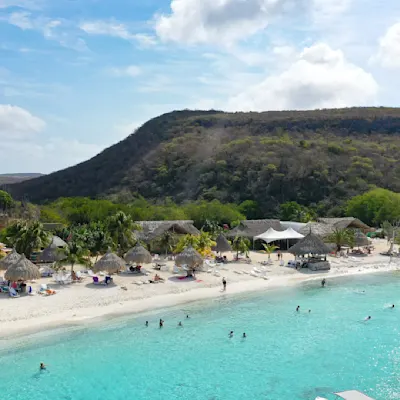
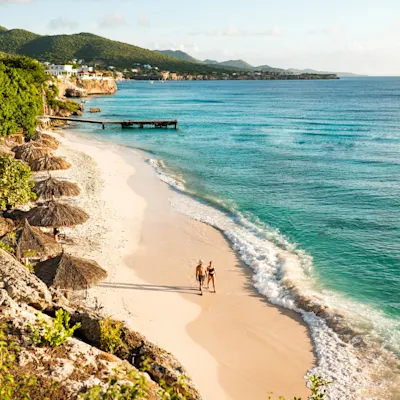
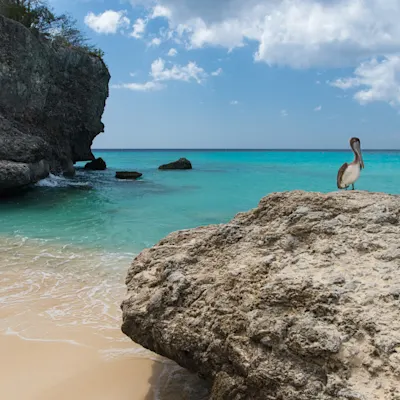
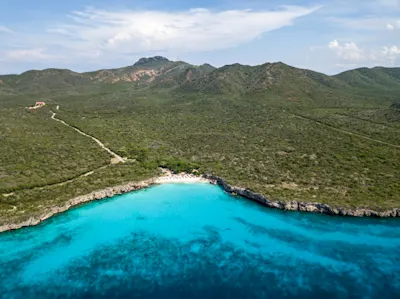
Curaçao's 35+ beaches are all located along the island's calm southern and western shores, protected, swimmable, and consistently clear of sargassum. These are the beaches visitors spend their time on, and they remain beautiful and accessible year-round.
The small amount of sargassum that does reach Curaçao lands exactly where no one is swimming.
Will Sargassum affect my Curaçao beach vacation?
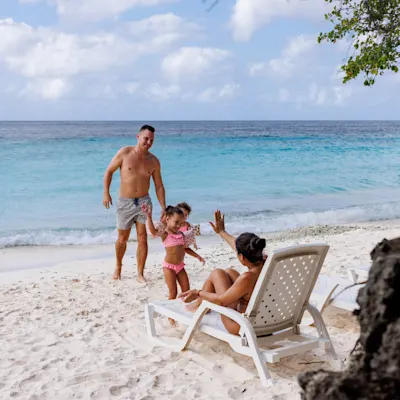
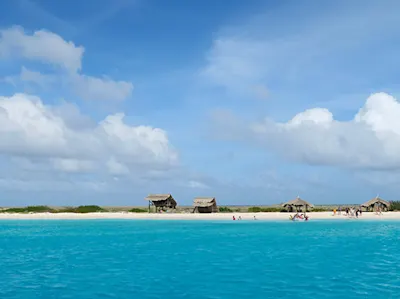
No. Visitors to Curaçao can expect clear, turquoise water and clean beach conditions year-round. Over 35 beaches line the calm southern and western coasts, all with minimal to no seaweed disruption. You do not need to check seaweed forecasts before visiting Curaçao.
While no destination can claim to be entirely immune to the ocean's movements, large-scale sargassum accumulation on Curaçao's visitor beaches is extremely rare, and the island's geography means it is very unlikely to change.
When is the best time to visit Curaçao to avoid sargassum?
Any time. Because of the island's position outside the main sargassum drift path, and because the beaches visitors use are on the protected southern and western coasts, there is no bad season for beach conditions in Curaçao. Visitors enjoy clear water whether they arrive in the middle of summer or mid-winter.
Across much of the Caribbean, the sargassum season (typically peaking from April through October) adds planning anxiety. Will the beach be clear when we arrive? Should we shift our trip to avoid peak months? In Curaçao, that conversation doesn't happen. The beach experience is the same year-round: calm, clear water, fine sand, and brilliant turquoise color.
How does Curaçao compare to other Caribbean destinations for sargassum?
Sargassum affects Caribbean destinations very unevenly. Islands that face east into the Atlantic and lie within the main drift path of the Great Atlantic Sargassum Belt are far more exposed. Curaçao's southern Caribbean location places it outside these current systems, so floating sargassum is largely diverted away before it can reach the coast.
Many popular Caribbean destinations experience significant sargassum accumulation during peak season (May through August), requiring extensive cleanup efforts and affecting beach conditions. Curaçao does not face this challenge on its visitor beaches.
Is Sargassum harmful to swimmers?
Swimming through small amounts of sargassum is generally harmless. The main concern arises when large quantities wash ashore and begin to decompose, releasing hydrogen sulfide gas which causes an unpleasant smell and, in high concentrations, mild respiratory discomfort. This is not something visitors to Curaçao's beaches typically encounter.
What should I know about Curaçao's beaches and sargassum?
Curaçao has 35+ beaches, all located on the southern and western coasts. These beaches are protected from Atlantic currents and remain clear of sargassum year-round. The island's northern coastline is uninhabited, rocky, and unsuitable for swimming. This is where any sargassum that reaches the island occasionally lands.
You can book a Curaçao beach vacation at any time of year without concerns about seaweed affecting your trip. The water is as clear as it looks in photos, and it stays that way.